
Elora Science Forum Holds Discussion on Proposed Reduction of Kaziranga Eco-Sensitive Zone“Development must ensure protection and justice for our future generations,” says Bhatnagar Award-winning scientist Dr. Bhupendra Nath Goswami.
Dalim Phukan.
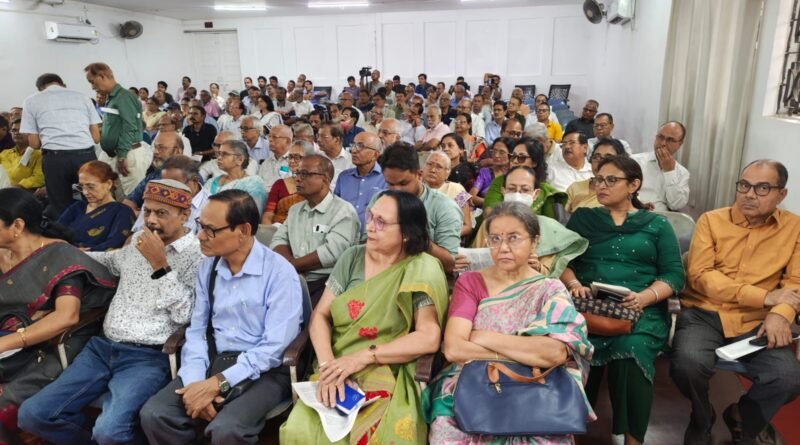
Hills live News, Guwahati, October 31: A discussion meeting was organised by the Elora Science Forum at Lakshmiram Bhawan in Guwahati today to deliberate on the government’s proposal to reduce the extent of the Eco-Sensitive Zone (ESZ) surrounding Kaziranga National Park.
The meeting was convened in view of the need to develop a scientific, impartial and broad-based public opinion on the possible implications of reducing the Eco-Sensitive Zone on Kaziranga’s wildlife, climate, riverine landscape, local communities and overall environmental protection.
Explaining the objective of the meeting, the Forum’s State Secretary, Manoj Rai, emphasised the need for a scientific study of the issue. The subject was formally introduced on behalf of the Forum by Bhupen Kumar Sharma, President of its Kaliabor branch.
The meeting was chaired by renowned popular science writer Dr. Dinesh Chandra Goswami. Eminent climate and meteorological scientist Dr. Bhupendra Nath Goswami and noted environmental activist and senior journalist Apurba Ballabh Goswami participated as the principal speakers.
In his address, Apurba Ballabh Goswami said that any reduction in the Eco-Sensitive Zone would directly affect Kaziranga’s wildlife, climate and the lives of local communities. He warned that uncontrolled commercialisation could encourage the construction of large hotels, resorts and other commercial establishments close to the national park, disturbing the peaceful habitat and free movement of wildlife.
He further cautioned that if natural wildlife corridors were completely blocked, animals such as wild elephants and tigers would be compelled to enter human-inhabited areas. He strongly opposed the proposed reduction of the Eco-Sensitive Zone.
Addressing the gathering, renowned climate scientist and Bhatnagar Award recipient Dr. Bhupendra Nath Goswami stated that reducing the Eco-Sensitive Zone would pose a serious threat to the natural movement of wildlife and the overall protection of Kaziranga.
He observed that environmental destruction in the name of development would ultimately affect human society as well. Emphasising the need to move beyond GDP-centric development, he advocated sustainable development, stating that only such a development model could ensure protection and justice for future generations.
The Forum’s Joint Secretary, Anup Raychaudhury, also placed a proposal before the meeting, drawing attention to the ecological heritage and importance of Kaziranga. He suggested that any decision regarding the reduction of the Eco-Sensitive Zone should be considered only on the basis of reports submitted by experts.
Among those present, Cotton College professor Dr. Rituraj Kalita, scientist Dr. Amrit Goswami, writer Kishore Kalita, environmental activist Yusuf Alam Choudhury, scientist Robin Dutta and Dr. Anil Choudhury offered their valuable suggestions and observations on the proposal.
The meeting adopted a resolution opposing the proposed reduction of the Eco-Sensitive Zone (ESZ) of Kaziranga.
In his concluding remarks from the chair, scientist Dr. Dinesh Goswami observed that if nature continued to be destroyed in the name of development, humanity itself would have to bear the adverse consequences. HeU pointed out that many people were yet to fully understand the causes and consequences of environmental degradation and stressed the need to create greater public awareness about these issues.
“ We cannot allow Kaziranga to be endangered” was the central message of the discussion.
The meeting concluded with a vote of thanks offered by the Forum’s State President, Dr. Manoranjan Sharma.