
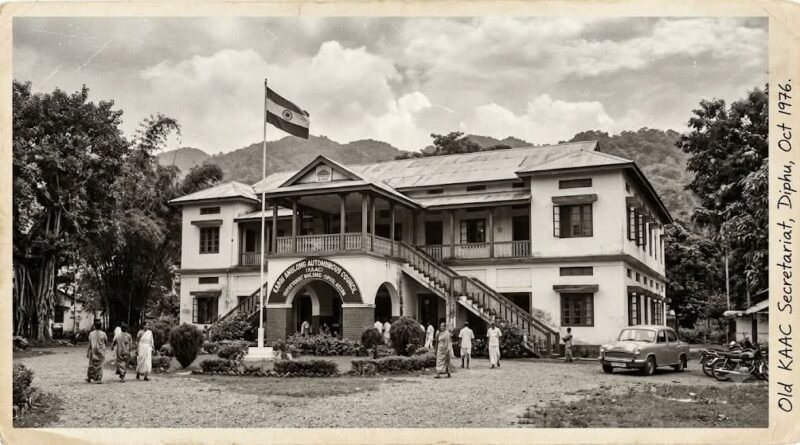
Deep financial crunch strikes KAAC
Sushanta Roy,
Hills Live News, Diphu, October 24: The financial health of the Karbi Anglong Autonomous Council (KAAC) has come under intense scrutiny as a severe payment crisis deepens across the hill districts.
A massive backlog of pending bills spanning several years has paralyzed local suppliers, civil contractors, media houses, and internal departmental offices.
Essential operational expenditures, including office contingencies and publicity dues, have remained frozen, triggering widespread anxiety and economic distress among stakeholders.
Despite the council presenting a substantial budget framework (such as the ₹1,678.55 crore budget for the 2026–27 fiscal year) focused on infrastructure and regional development, ground-level execution is severely hampered by legacy liabilities. Multiple categories of payments have languished without clearance for prolonged periods:
Civil contractors who successfully completed developmental works, rural roads, and public infrastructure projects under various Annual Action Plans (AAP) report that their payments have been blocked for years.
Many small and medium-scale contractors face imminent financial bankruptcy due to mounting bank liabilities and blocked and working capital.
Local newspapers, regional media agencies, and empanelled publicity channels that extended services for government notifications, awareness campaigns, and public interest advertisements have not received dues dating back multiple years.
This has severely strained the operational viability of regional media outlets operating out of Diphu and other sub-divisions.
Routine administrative functioning has hit a roadblock. Office contingency funds meant for stationery, fuel, minor repairs, utilities, and day-to-day running costs of various KAAC departments have dried up, forcing department heads to either stall minor services or manage operations out of pocket.
Insiders and financial analysts point to a combination of systemic structural issues and administrative bottlenecks compounding the crisis:
Discrepancies between sanctioned budgetary estimates and actual cash flow releases from higher administrative authorities have chronically plagued autonomous bodies, leaving liabilities to roll over year after year.
Long-pending files are frequently caught in multi-layered bureaucratic scrutiny. Administrative requirements such as retrospective technical sanctions, delayed field measurements and physical verification bottlenecks have historically been used to defer clearing legitimate claims.
Because fresh allocations are routinely prioritized for newly initiated projects under special grants, legacy liabilities from past years are pushed to the background, causing old arrears to compound indefinitely.
The cascading effect of the liquidity freeze is visible across the twin districts of Karbi Anglong. Local commerce relies heavily on government capital circulation; with contractor payments and supplier bills stuck in limbo, market liquidity has plummeted.
Small vendors dependent on office contingency orders and local media houses struggling with unpaid advertisement bills are finding it increasingly difficult to sustain operations.
Affected contractors and service providers have urged the KAAC executive leadership and the state government to intervene immediately.
They are demanding a comprehensive white paper on pending liabilities, a transparent, chronological clearance mechanism for old bills, and an urgent special financial package to liquidate pending dues dating back several years.
As the fiscal year progresses, all eyes remain on the council’s executive committee to address this systemic financial bottleneck and restore economic confidence in the autonomous administration.